


Have you noticed? In convenience store refrigerators, certain beverages with herbal ingredients swirling inside transparent bottles have quietly taken over the center stage of the drinks section.
In front of a convenience store refrigerator in Beijing, white-collar worker Li Yang abandoned her usual sugar-free cola and chose a bottle of aged tangerine peel and coix seed water labeled "traditionally brewed."
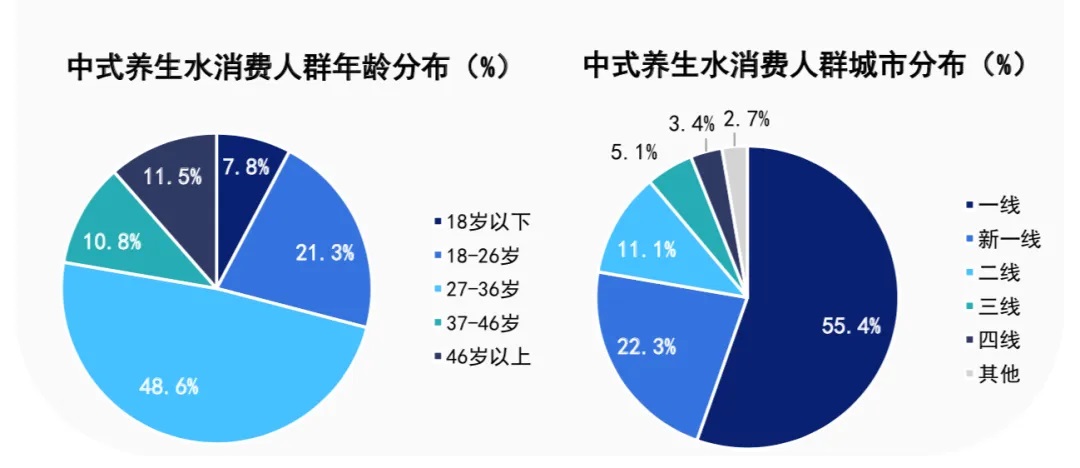
She told a reporter from Economic Information Daily that she usually doesn't like drinking plain water, but the tangerine peel and coix seed water tastes better and can also "remove dampness and strengthen the spleen." Li Yang is just a microcosm of the growing number of young consumers favoring Chinese-style wellness waters.
According to the reporter's visits, various Chinese-style wellness waters are moving to the "C position" of beverage display shelves. Many store staff said that more and more customers are buying Chinese-style wellness waters, and some popular categories sometimes sell out.
01
A New Market Favorite
"Stay up the latest, drink the most nourishing water." Young people's demand for "punk wellness" has transformed the millennia-old wisdom of food-medicine homology into bottles of ready-to-drink "Chinese-style wellness water" on the shelves.
So-called "Chinese-style wellness water" usually refers to ready-to-drink plant beverages made from food-medicine homologous ingredients such as red beans, coix seed, red dates, longan, goji berries, and cassia seeds, through processes like boiling and extraction. These beverages emphasize naturalness and health, precisely meeting the "wellness" needs of today's young people.
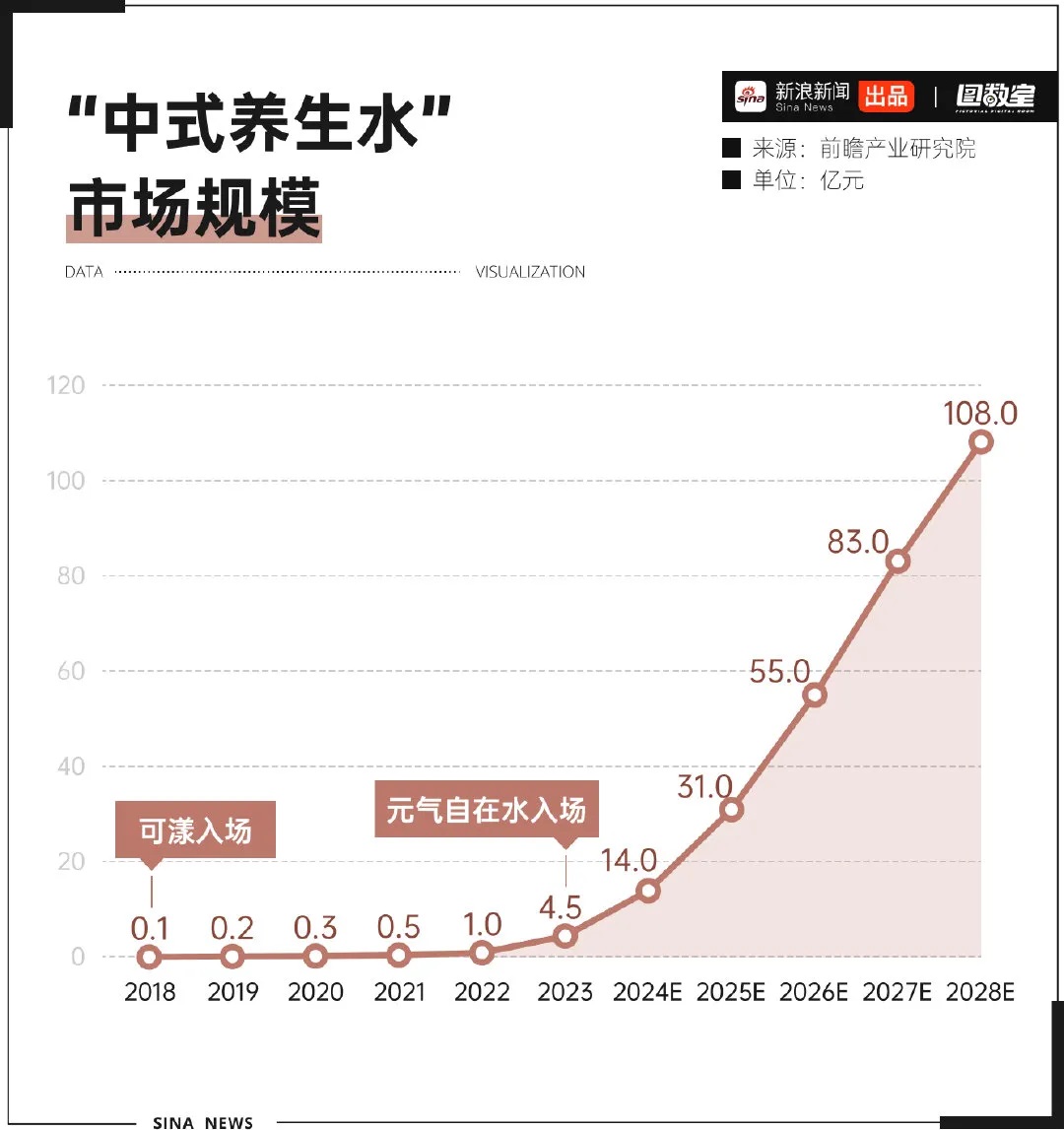
According to the "2024 Insight Report on the Development Trends of the Chinese-style Wellness Water Industry" released by Qianzhan Industry Research Institute, the domestic market size of food-medicine homologous tea beverages reached 450 million yuan in 2023 and is expected to exceed 10 billion yuan by 2028. The explosive growth of the market is attracting more and more enterprises and brands to enter the race.
02
A Hundred Products Competing
The Chinese-style wellness water track has formed a diversified competitive landscape, with major players divided into several camps: new consumer brands represented by Genki Forest, Keyang, and Haowangshui; retail players represented by Hema and Sam's Club; time-honored brands represented by Tongrentang and Wanglaoji; and traditional beverage giants crossing over, represented by Yili, Master Kong, and Uni-President.
Keyang was the earliest brand to launch Chinese-style wellness water. In 2018, based on the application of a patented red bean water extraction and purification technology, it launched the industry's first sediment-free red bean and coix seed water.
This marked the formal emergence of the Chinese-style wellness water subcategory.
Subsequently, Genki Forest officially launched its "Zizai Shui" series in early 2023, which grew rapidly after launch and has become one of the fastest-growing single products in the brand's history.
Traditional beverage giants have also entered the fray. Master Kong launched cassia seed barley drink and goji chrysanthemum tea, while Uni-President introduced Korean Woongjin corn silk and hovenia dulcis "herbal formula" plant beverages.
Time-honored pharmaceutical companies, by combining century-old formulas with modern processes, have created products with authoritative endorsement.
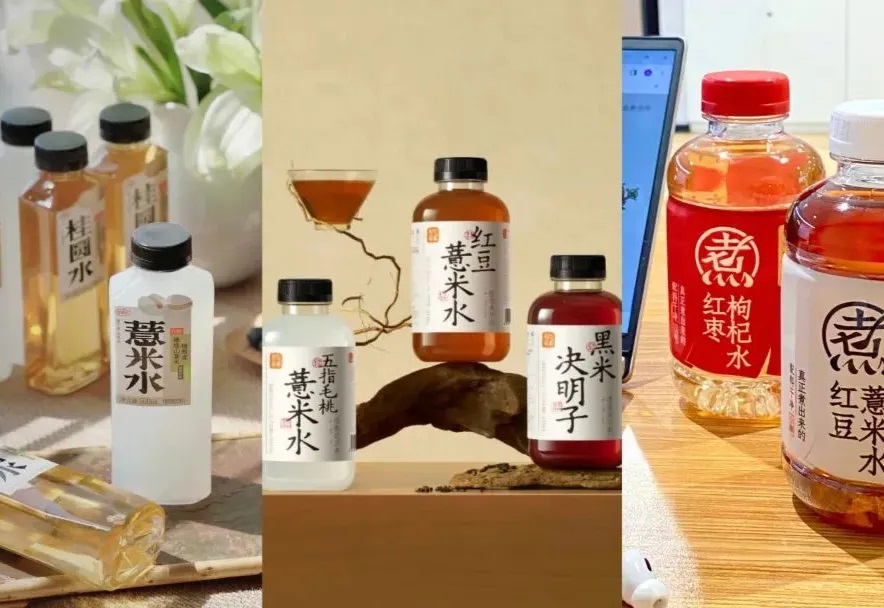

As market competition intensifies, the Chinese-style wellness water track has begun to show a trend of differentiation. Due to different company "genes," their product strategies and market preferences also differ. FMCG companies mostly favor "water substitute" wellness waters, while traditional Chinese medicine companies tend to prefer functional beverage products.
"Functional beverages," on the other hand, emphasize health benefits more, often using traditional Chinese medicine formulas, targeting common consumer health issues such as dampness removal, qi and blood supplementation, and calming and sleep aid.
These products are generally priced higher, and market acceptance faces challenges.
The first issue is homogenization. Currently, most wellness water products on the market still revolve around familiar ingredients like red beans, coix seed, and mung beans in permutations and combinations, resulting in products that are largely similar.
A more fundamental challenge lies in the lack of standards. An expert from the Shandong Institute of Standardization pointed out: "Chinese-style wellness water currently follows the relevant specifications and standards for plant beverage products, and there is an urgent need to establish a dedicated industry standard system."
In addition, whether wellness water can truly nourish health also needs to be viewed dialectically. Sun Fenglei, chief physician of the Comprehensive Internal Medicine Department at the Affiliated Hospital of Shandong University of Traditional Chinese Medicine, believes that the main function of wellness water is to supplement water, and the content of Chinese medicinal ingredients is limited, so its wellness effect is relatively weak. He reminds consumers not to have overly high expectations for such beverages.
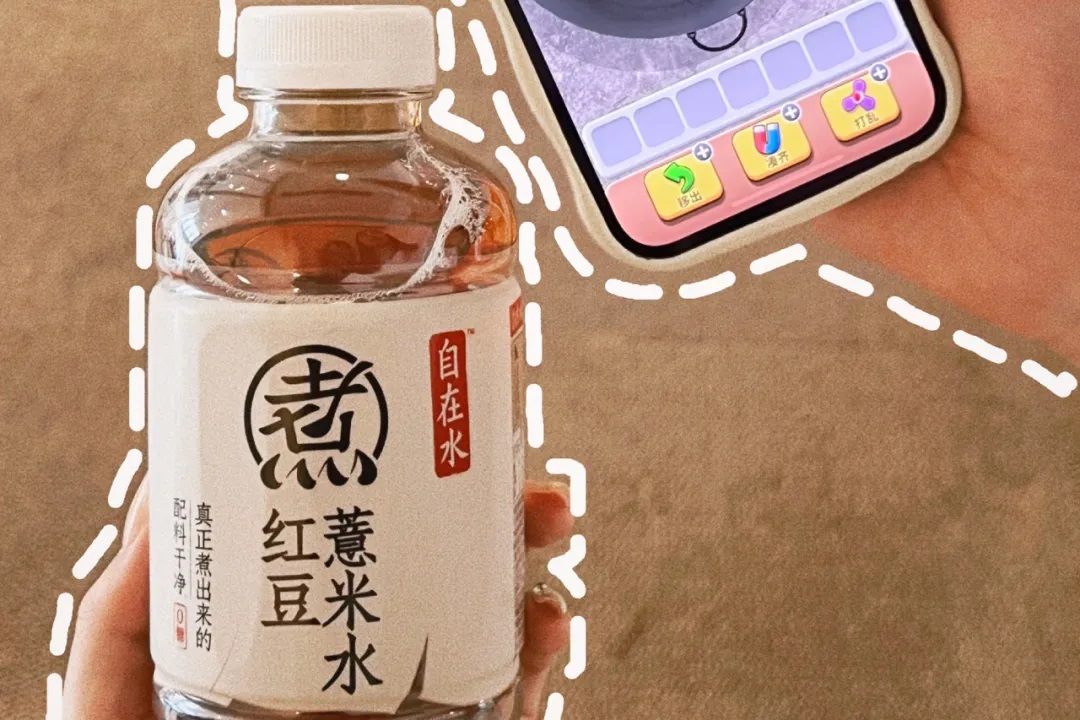
Watching young people carrying wellness water as they walk out of stores, we can't help but wonder: Is this wellness trend merely a short-lived market fad, or does it truly represent a profound shift in health consumption concepts?
In any case, this generation of young people, raised on the concept of "punk wellness," is voting with their consumption, transforming the millennia-old wisdom of food-medicine homology into bottles of ready-to-drink "Chinese-style wellness water" on the shelves.